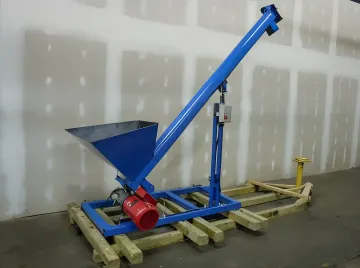
What is an incline conveyor?
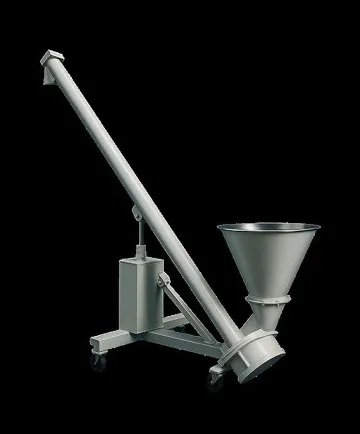
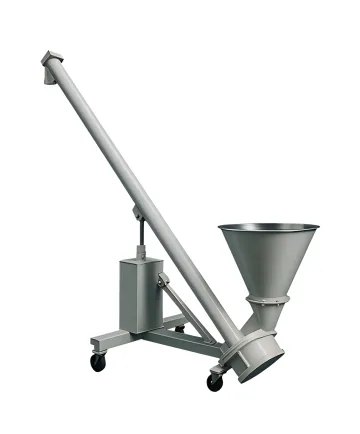
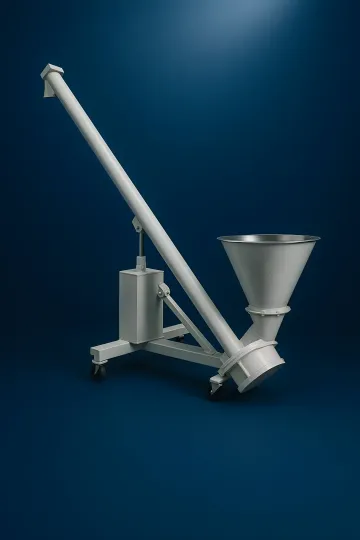
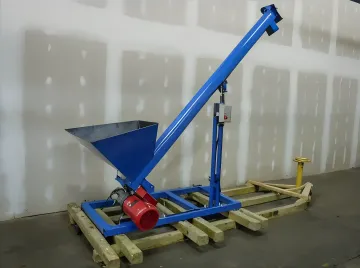
An inclined conveyor is a material handling system designed to transport bulk solids, powders, or granules at an upward or downward angle between process elevations. Inclined screw conveyors use a rotating auger within an enclosed tube to move materials along the incline, making them ideal for connecting equipment at different heights within a facility while containing dust and preventing contamination.
What are the three types of conveyors?
Based on orientation, screw conveyors are available in three primary configurations: horizontal, inclined, and vertical. Horizontal screw conveyors move material along a flat plane, inclined screw conveyors transport material at an upward or downward angle (typically up to 45 degrees), and vertical screw conveyors move material straight up. JERSEY CRUSHER engineers inclined screw conveyors in 6" to 12" diameters for bulk solids handling, recommending a vertical design when angles exceed 45 degrees.
What is the maximum incline angle for a screw conveyor?
Screw conveyors can typically operate at incline angles up to 45 degrees, though capacity decreases as the angle increases. For many bulk solids, optimal efficiency is maintained between 15 and 30 degrees. Beyond 45 degrees, a vertical screw conveyor design is recommended. The specific maximum angle depends on the material's flowability, particle size, and bulk density — JERSEY CRUSHER engineers assess each application individually.
What materials can an inclined screw conveyor handle?
JERSEY CRUSHER inclined screw conveyors handle a wide range of bulk materials including grains, spices, powders, sugar, chemical intermediates, minerals, fertilizers, animal feed, pharmaceutical excipients, sawdust, and biomass. They are particularly effective for wet, sticky, or compacted materials that would challenge belt or bucket conveyors, thanks to their enclosed tube construction and positive displacement action.
What diameter options are available for inclined screw conveyors?
Standard diameter configurations range from 6 inches to 12 inches. For higher-throughput applications requiring greater capacity, custom diameters beyond 12 inches are available as engineered-to-order solutions. The appropriate diameter is determined by required throughput volume, material bulk density, incline angle, and integration geometry with existing upstream and downstream equipment.
What construction material options are available for sanitary or food-grade applications?
JERSEY CRUSHER inclined screw conveyors are available in carbon steel with blue enamel finish, 304 stainless steel, and 316 sanitary stainless steel. The 316 SS option is designed for food, pharmaceutical, and sugar industry applications requiring FDA-adjacent sanitary construction, food-contact surface compliance, and NFPA 61 combustion risk mitigation for combustible powder environments.
Which industries use inclined screw conveyors from JERSEY CRUSHER?
JERSEY CRUSHER inclined screw conveyors serve food and beverage, chemical and pharmaceutical, agriculture and animal feed, and mining and minerals industries. Specific applications include inclined transport of grains, spices, and sugar in food processing; dust-controlled conveying of APIs and chemical powders; bulk grain and fertilizer handling in feed mills; and heavy-duty movement of mineral feedstock and concentrate between process elevations.
Can inclined screw conveyors integrate with existing processing equipment?
Yes. JERSEY CRUSHER inclined screw conveyors are engineered to integrate directly with lump breakers (Lump Busters®), particle-izers, volumetric feeders, AGVs, and robotic finished-goods handlers. Custom inlet and discharge configurations, variable speed drives, and flexible mounting geometries allow seamless drop-in integration into existing production lines without major facility modifications.