
Call Us!
Lump Breaker Machines for Pulp & Paper Manufacturing
In pulp and paper manufacturing, material consistency is essential to maintaining process stability and product quality. Yet pulp fibers, recycled paper stock, and powdered or granular processing additives often form hardened clumps during storage and handling. Moisture fluctuations, compaction in silos, and extended storage time can cause materials to bind together. These dense masses disrupt batching systems, clog feed equipment, and create irregular flow into refiners, mixers, and forming sections. The result is inconsistent sheet formation, reduced efficiency, and unnecessary strain on downstream equipment.
For plant supervisors and process engineers, preventing these disruptions is a constant priority. JERSEY CRUSHER has more than 40 years of experience manufacturing high-performance lump breaker machines designed to restore flow consistency in industries where agglomeration is common. Our equipment reduces compacted pulp materials and additives into manageable particle sizes before they reach critical process stages. By conditioning materials early, we help protect your equipment, stabilize production, and maintain uniform product quality. If your facility is experiencing flow challenges due to lump formation, JERSEY CRUSHER offers customized solutions tailored to your operation.

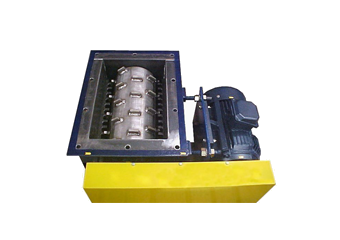
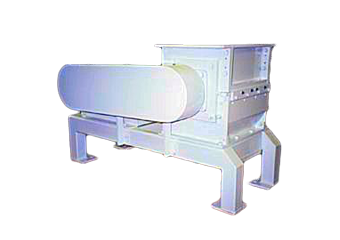
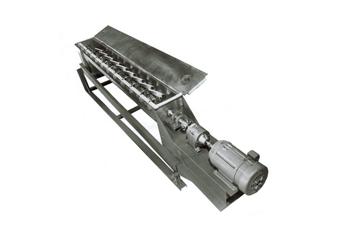
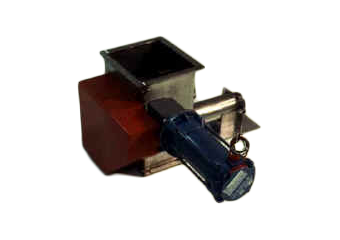
Common Causes of Material Agglomeration in Pulp & Paper Facilities
Agglomeration is not unusual in pulp and paper operations. Understanding the contributing factors helps facilities address the issue effectively.
- Moisture Variability: Pulp fibers and recycled materials are sensitive to changes in humidity. Excess moisture promotes particle bonding, especially during storage. Even controlled indoor environments can experience seasonal shifts that encourage clumping.
- Compaction in Storage Systems: Bulk materials stored in silos, bins, or supersacks are subject to continuous pressure. Over time, lower layers compress and consolidate. Additives such as fillers, starches, and specialty chemicals are especially prone to forming hardened sections under sustained weight.
- Extended Dwell Time: Inventory that remains unused for long periods is more likely to compact. Production slowdowns, scheduling changes, or supply chain adjustments can extend storage time and increase agglomeration risk.
- Temperature Fluctuations: Temperature shifts cause expansion and contraction within stored materials. Combined with moisture, these changes strengthen bonds between particles and produce dense clumps that resist flow.
- Material Characteristics: Certain recycled fiber blends and powdered additives naturally tend to bridge or cake. Their particle size distribution and surface properties influence how easily they consolidate.
When these factors intersect, material flow becomes unpredictable. Addressing lump formation before materials enter sensitive process stages is essential for maintaining operational stability.
Maintaining Steady Production With Efficient Lump Reduction
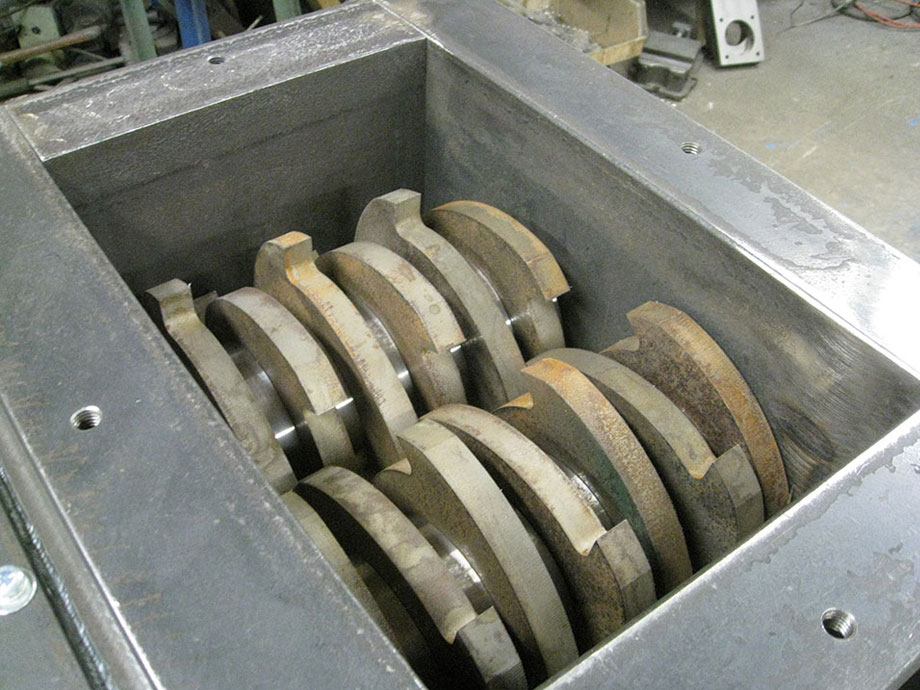
A lump breaker is designed to condition material, not pulverize it. In pulp and paper facilities, the objective is to restore manageable particle size while preserving the functional properties of fibers and additives.
- Consistent Feed Rates: Reducing hardened clumps at the discharge point of silos or hoppers ensures steady flow into mixers and refiners. Consistent feed supports stable batching and improves process control.
- Uniform Material Distribution: Even distribution of fibers and additives contributes directly to sheet uniformity. By eliminating oversized masses, lump breakers help maintain balanced mixtures and reduce variability.
- Improved Process Reliability: Unexpected blockages force operators to intervene manually, slowing production. Installing a lump breaker upstream reduces interruptions and supports continuous operation.
- Optimized Throughput: Facilities operating at high capacity depend on predictable material flow. Conditioning materials before they reach conveyors and feeders prevents bottlenecks that limit output.
Efficient lump reduction strengthens the entire production chain. Stable input leads to stable output.
Contact Us
Equipment Protection and Reduced Downtime
Contact Us
Unconditioned lumps can cause more than flow disruptions. They place unnecessary stress on equipment designed to handle consistent particle sizes.
- Reduced Mechanical Strain: Large clumps overload feeders, rotary valves, and conveyors. Breaking down agglomerated material upstream reduces torque spikes and mechanical stress.
- Minimized Wear: Abrupt surges of dense material accelerate wear on processing components. Lump breakers create a more controlled feed environment, extending equipment life.
- Lower Maintenance Frequency: Blockages often require shutdowns for clearing and inspection. By preventing these events, lump breakers help reduce maintenance labor and lost production time.
- Improved Safety: Manual clearing of compacted material presents safety concerns. Automated lump reduction reduces the need for operator intervention at hopper discharge points.
Protecting your processing equipment supports long-term reliability and cost control.
Custom Engineering for Unique Facility Layouts
Every pulp and paper facility has distinct requirements. Production volume, available space, material characteristics, and existing infrastructure all influence equipment selection.
- Strategic Placement: Lump breakers are commonly installed at silo outlets, hopper discharges, or upstream of batching systems. Proper placement ensures effective conditioning without disrupting workflow.
- Capacity Matching: Throughput demands vary across facilities. JERSEY CRUSHER evaluates material density, lump size, and flow rates to design machines that meet your production targets.
- Integration With Conveying Systems: Our equipment integrates with belt conveyors, screw feeders, and pneumatic transport systems. Seamless integration supports continuous operation.
- Durable Construction: Industrial pulp and paper environments require robust machinery. JERSEY CRUSHER designs emphasize structural strength and long service life to withstand demanding conditions.
Our engineering team works closely with plant supervisors and process engineers to deliver equipment that aligns with operational goals.
Frequently Asked Questions About Lump Breakers for Pulp & Paper
Contact JERSEY CRUSHER for a Tailored Processing Solution
For more than four decades, JERSEY CRUSHER has provided reliable lump breaker machines to industries where bulk materials tend to agglomerate during storage or handling. In pulp and paper manufacturing, consistent material flow supports stable batching, protects critical equipment, and contributes directly to finished product quality.
Our precision manufacturing process ensures that every machine, including lump breakers, lump abradors, and particle-ziers, is built for durability, efficiency, and dependable performance. We understand the operational pressures facing plant supervisors and process engineers. Downtime, inconsistent feed rates, and equipment strain are not minor inconveniences. They affect productivity, profitability, and long-term reliability.
By integrating a properly engineered lump breaker into your handling system, you create a more controlled and predictable production environment. Our team works with you to evaluate material behavior, throughput demands, and layout constraints before recommending a customized solution. We also offer spare parts in the event that something happens to your equipment.
If hardened pulp materials or additives are disrupting your operation, JERSEY CRUSHER is ready to assist. Contact us to discuss your processing challenges, request technical specifications, or explore a tailored lump breaker solution designed to maintain reliable throughput in your pulp and paper facility.
Contact Us