
Call Us!
Expand Image
Hammer Mill Crushers & Grinders in Wayne, NJ
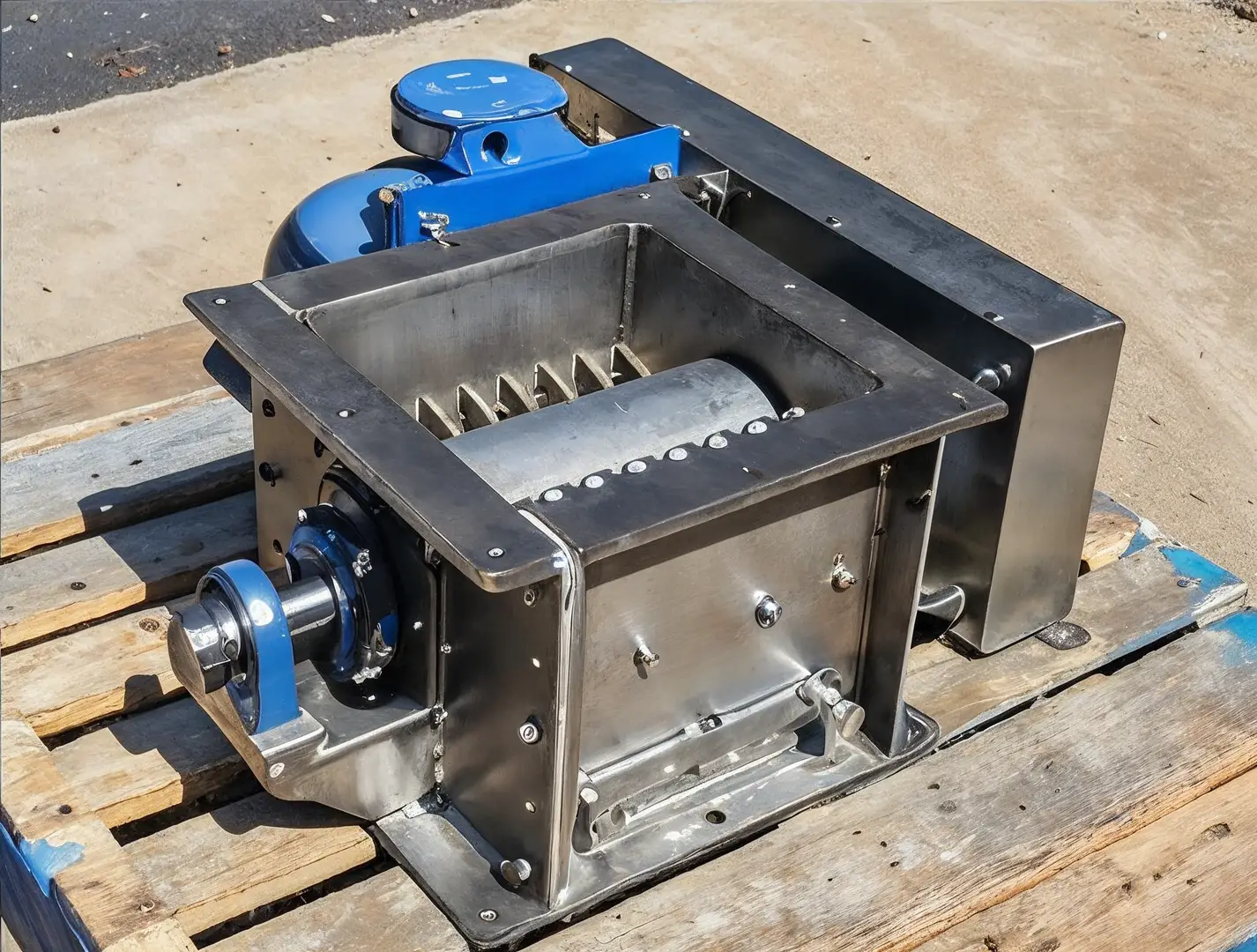
JERSEY CRUSHER designs and supplies hammer mill grinders that support reliable size reduction across industrial processing environments. Based in Wayne, NJ, our team works with manufacturers, processors, and mining operations that require consistent performance from every crusher and mill in their system. Hammer mill crushers play a key role in comminution, using impact and rotational motion to reduce raw materials into controlled particle sizes that move smoothly through a plant.
Our hammer mill equipment is engineered to integrate with broader material handling solutions. These machines are often used alongside lump breakers, screw conveyors, and feeder systems to create a steady material flow from intake through final processing. This systems-based approach allows operators to reduce downtime while maintaining predictable output.
Get a Quote
Contact Us
How Hammer Mill Crushers Operate
A hammer mill crusher reduces material through repeated impact generated by a high-speed rotating assembly. As material enters the machine, it encounters a rotor fitted with hardened hammer components. These hammers apply force to fracture and grind the material until it passes through a sizing screen that defines the final output.
This impact-driven process differs from compression-based equipment, such as a burr mill. Hammer mills rely on centrifugal force and kinetic energy rather than pressure between fixed surfaces. This allows them to process materials like coal, limestone, clay, and coke with flexibility across varying feed conditions.
Core Components of a Hammer Mill
Each hammer mill machine is built around several essential components that influence performance and longevity:
- A steel housing designed to absorb impact and limit vibration
- A precision-balanced rotor that maintains stable rotation
- Replaceable hammer elements selected for material hardness and wear resistance
- Bearings and shaft assemblies built for continuous duty cycles
- Screens that regulate particle size during the grind process
These components work together to support reliable operation when handling rock, ore, concrete, and similar materials.
Materials Commonly Processed With Hammer Mills
Hammer mill grinders are used across a wide range of industries where bulk solids must be reduced before further processing. JERSEY CRUSHER equipment supports applications that span mining, construction, and industrial manufacturing.
Mining and Mineral Processing
In mining operations, hammer mill crushers are used to reduce ore prior to separation, classification, or transport. Materials such as iron-bearing rock, limestone, and coal respond well to impact-based comminution. Hammer mills are also applied in cement and lime production, where controlled feed size supports efficient kiln operation.
These systems are often paired with upstream lump breakers to manage oversized material before it reaches the mill. Equipment like Lumpbusters and lump abradors helps condition feedstock before impact grinding occurs.
Construction and Recycling Applications
Hammer mills are widely used in construction material processing, reducing concrete and demolition debris into reusable aggregate. Their tolerance for variable feed size and material composition makes them suitable for recycling environments tied to construction projects. In these settings, hammer mills are frequently integrated with screw conveyors to move material between processing stages.
Industrial and Agricultural Uses
In industrial processing, hammer mills are used to grind materials such as grain and clay to consistent sizes. These applications depend on predictable rotor speed, controlled hammer wear, and stable bearing performance. Smaller configurations may also be applied in laboratory environments where material testing or formulation development is required. For applications that require finer output or tighter control over particle size distribution, hammer mills may be paired with Particle-izers as part of a staged reduction system.
Engineering Considerations and Material Selection
Steel Construction and Wear Management
JERSEY CRUSHER hammer mills are built using steel selected for structural strength and impact resistance. High-wear components may incorporate manganese alloys to reduce abrasion during the processing of materials such as limestone, cement clinker, or iron-rich ore. These material choices influence service life and help maintain consistent performance over time.
Wear patterns vary based on feed material, rotor speed, and operating hours. By accounting for these variables during design, our engineering team supports predictable maintenance planning.
Rotor, Hammer, and Bearing Design
The rotor assembly plays a central role in hammer mill performance. Proper balance limits vibration and protects bearings and couplings from excessive load. Hammer geometry affects how force is transferred to the material and how efficiently it is reduced.
Bearings are selected to handle radial and axial forces generated during operation. Couplings connect the drive system to the rotor and must remain aligned to ensure smooth power transmission throughout the duty cycle.
Performance Factors That Influence Output
Hammer mill crushers rely on several interacting forces to effectively reduce material. Centrifugal force drives the hammers outward during rotation, increasing impact energy when material enters the chamber. This energy, combined with hammer mass and speed, determines reduction efficiency.
Screen selection also helps control output size. Adjusting screen openings allows operators to fine-tune the grind without altering upstream feed conditions.
Integration With Feeding and Handling Systems
Hammer mills rarely operate in isolation. They are commonly integrated into systems that include volumetric feeders and material handling equipment. Volumetric feeder systems regulate feed rate into the mill, supporting consistent load conditions and steady output.
Downstream, conveyors and transfer systems move reduced material to the next stage of processing. Coordinating these components helps stabilize pressure within the system and supports reliable throughput.
Maintenance and Service Support
Routine maintenance supports long-term performance of the hammer mill. Typical service activities include inspecting hammer wear, monitoring bearing condition, checking coupling alignment, and addressing vibration trends. These steps help identify issues early and reduce unplanned downtime.
Access to replacement components is also important. JERSEY CRUSHER supplies spare parts to support ongoing maintenance and equipment uptime. With a structured maintenance plan, hammer mills can operate across extended production cycles with consistent results.
Talk With JERSEY CRUSHER About Hammer Mill Crushers
If your operation requires dependable hammer mill crushers or hammer mill grinders, JERSEY CRUSHER is ready to support your application. From mining and construction to cement, grain, and industrial processing, our team develops solutions that align with real operating conditions.
Contact JERSEY CRUSHER in Wayne, NJ to discuss your material, production goals, and system requirements. We can help configure a hammer mill solution that integrates smoothly with your existing equipment and supports consistent size reduction across your plant.